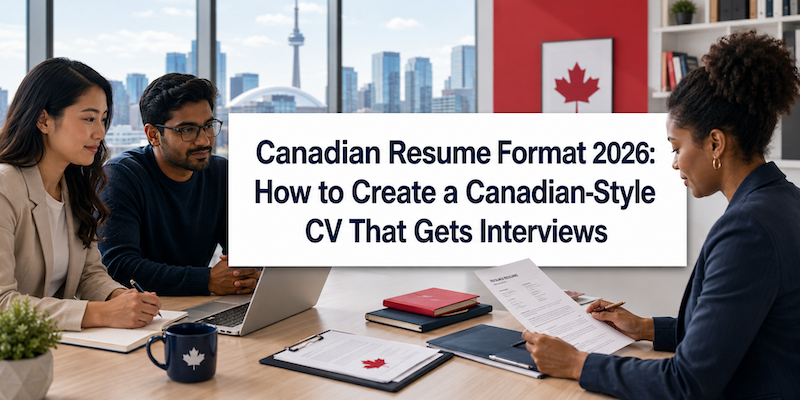
A strong Canadian resume helps you get job interviews. Canada has a very competitive job market. Your resume must be clear, simple, and well organized.
It does not matter if you are a new graduate, an experienced worker, or applying with a work permit. You need to follow the correct Canadian resume format to improve your chances.
Today, most companies use computer systems to scan resumes. These systems are called ATS (Applicant Tracking Systems). They look for keywords and proper formatting.
Your resume must be easy for both people and computers to read.
This 2026 guide explains the correct Canadian resume format, structure, and best tips to help you succeed.
What Is the Canadian Resume Format?
A Canadian resume is a short document that shows your skills, work experience, and achievements. It is clear and focused on results.
Canadian resumes:
- Are 1–2 pages long
- Do not include age, religion, marital status, or a photo
- Focus on measurable results
- Are tailored for each job
- Are optimized for ATS systems
Key Features of a Canadian Resume
- Clean and simple layout
- Work history in reverse order (latest job first)
- Bullet points that show results
- Keywords that match the job posting
- No references listed (say “Available upon request” if needed)
Why the Right Format Matters in Canada
If you use the wrong format, your resume may be rejected right away.
Employers in Canada want resumes that are clear and easy to read.
ATS Resume Optimization
Many companies use hiring software before a recruiter sees your resume.
If your resume:
- Does not include keywords from the job posting
- Uses tables or images
- Has messy formatting
The system may reject it.
Learning how hiring works is just as important as knowing how to prepare for a job interview, because your resume is the first step toward getting that interview.
First Impressions Matter
Your resume is your personal marketing tool. It must show your value quickly.
Strong resumes are important in fields like:
- Finance
- Technology
- Healthcare
- Engineering
- Legal services
- Management
Standard Canadian Resume Structure
Here is the best structure to follow.
1. Contact Information
Place this at the top:
- Full name
- Phone number
- Professional email
- LinkedIn profile
- City and province
Do not include:
- Photo
- Date of birth
- Marital status
- Social Insurance Number
2. Professional Summary
This is a short paragraph at the top. Write 3–5 short lines.
Include:
- Years of experience
- Main skills
- Industry
- A big achievement
Example:
Marketing professional with 7 years of experience in digital ads and SEO. Increased company sales by 42%. Strong skills in data analysis and online campaigns.
Keep this section simple and powerful.
3. Core Competencies
This is your skills section. List skills that match the job posting.
Example:
- Project Management
- Financial Analysis
- CRM Software
- Data Analytics
- Business Development
- Cloud Computing
- Strategic Planning
Use keywords from the job description. This helps with ATS ranking.
4. Professional Work Experience
List your jobs starting with the most recent one.
For each job include:
- Job title
- Company name
- City and province
- Dates (Month/Year – Month/Year)
Focus on Results
Do not just list duties.
Weak example:
- Managed a sales team.
Strong example:
- Led a team of 10 sales staff and increased revenue by 28% in one year.
Numbers make your resume stronger.
If you are looking for international work options, you may also explore guides like Ireland Job Vacancies 2026 – Latest Open Jobs, Salaries & How to Apply to understand how resumes differ in other countries.
5. Education
Include:
- Degree or certificate
- School name
- Location
- Graduation year (optional if you have many years of experience)
If you studied outside Canada, you may need an education check. Learn more about How to Apply for an ECA for Canada Express Entry if you plan to work or immigrate permanently.
6. Certifications and Training
Certifications help you stand out.
They are very important in:
- IT
- Finance
- Healthcare
- Human Resources
List the name of the certificate and the year received.
7. Optional Sections
You may also include:
Technical Skills
List tools, software, or coding languages.
Volunteer Experience
Very helpful for newcomers. It shows Canadian experience.
Projects or Publications
Useful for research, engineering, or academic jobs.
If you are new to Canada, you might also want to read about 25 best part-time jobs for international students abroad while building local experience.
Canadian Resume Formatting Rules
Good formatting makes your resume easy to read.
Font and Design
- Use Arial, Calibri, or Times New Roman
- Font size 10–12
- Keep margins normal
- Use clear spacing
- Avoid graphics and images
File Format
Send your resume as a PDF unless the employer says otherwise.
Use a professional file name:
FirstName_LastName_Resume.pdf
Resume vs CV in Canada
Many people confuse a resume with a CV.
Resume
- 1–2 pages
- Short and focused
- Used for most jobs
CV
- 3 or more pages
- Detailed academic history
- Used for research or medical jobs
Most employers in Canada ask for a resume, not a CV.
Tips for International Applicants
If you are applying from outside Canada, follow these tips.
Do not add personal details.
Focus on transferable skills like:
- Leadership
- Communication
- Problem-solving
- Teamwork
If you have Canadian volunteer or internship experience, include it.
Common Mistakes to Avoid
Listing Duties Instead of Results
Use numbers and achievements.
Sending the Same Resume Everywhere
Customize it for each job.
Using Too Many Buzzwords
Do not just say “hardworking.” Prove it with results.
Ignoring Keywords
Always match your resume to the job description.
Should You Hire a Professional Resume Writer?
For high-paying jobs, professional help can make a big difference.
A professional writer can:
- Improve formatting
- Add strong keywords
- Make your achievements stand out
- Increase interview chances
This is helpful in finance, law, tech, and management roles.
Quick Resume Checklist
✔ 1–2 pages
✔ Latest job listed first
✔ Results with numbers
✔ No personal details
✔ ATS-friendly format
✔ Clean layout
✔ Tailored to the job
✔ Saved as PDF
Final Thoughts
A strong Canadian resume helps you get noticed.
Keep it short. Keep it clear. Focus on results.
Use the right keywords. Follow proper formatting. Always tailor your resume to the job.
When done correctly, your resume will pass ATS systems and impress recruiters.
This is your first step toward building a successful career in Canada.