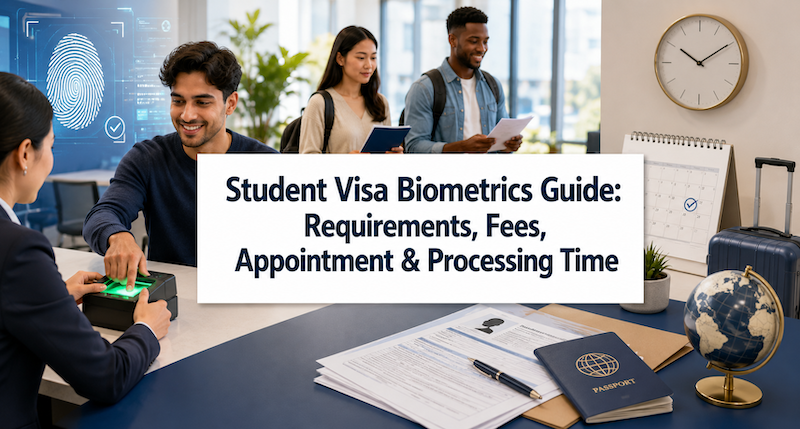
Planning to study abroad in 2026? One very important step is your student visa biometrics.
If you are going to the USA, UK, Canada, Australia, or Europe, you must give your biometrics. It is required. Without it, your visa will not move forward.
This guide explains the requirements, fees, appointment steps, processing time, and how to avoid delays.
Let’s make it simple.
What Are Student Visa Biometrics?
Biometrics means giving your:
- Fingerprints
- Digital photo
- Sometimes a digital signature
Immigration officers use this to:
- Confirm who you are
- Stop visa fraud
- Keep borders safe
- Check your travel record
Almost all top study countries now require biometrics.
Student Visa Biometrics Requirements (2026 Updated)
Each country has small differences. But most ask for the same basic documents.
Identity Documents
Bring:
- A valid passport
- Visa application confirmation page
- Visa fee receipt
- Biometrics appointment letter
- University admission letter
- Tuition payment proof
- Financial documents
Your financial documents are very important. If you are unsure how much proof you need, read How Much Proof of Financial Support Do You Need for a Student Visa?.
Extra Documents (Country-Based)
You may also need:
- I‑20 form (USA)
- CAS letter (UK)
- Letter of Introduction (Canada)
- Confirmation of Enrollment (Australia)
Always check the official immigration website before your appointment.
How to Book a Student Visa Biometrics Appointment
You can only book after you submit your visa application.
Follow These Steps
1. Complete the Online Visa Form
Fill out and submit your visa application online.
2. Pay the Fees
Pay both the visa fee and biometrics fee.
3. Get Your Biometrics Instruction Letter
Some countries, like Canada, send you a letter asking you to book.
If you applied to Canada, you can later track updates through the IRCC login portal guide.
4. Book an Appointment
Book at an approved center such as:
- Visa Application Center (VAC)
- Application Support Center (ASC)
- Embassy or Consulate
5. Attend the Appointment
Bring your passport and confirmation letter.
Tip: Book early. May to August is very busy for students.
Student Visa Biometrics Fees in 2026
Fees are usually non‑refundable.
Here are average costs:
| Country | Approximate Fee |
|---|---|
| USA (F‑1) | Included in visa fee |
| UK | £19–£20 |
| Canada | CAD $85 |
| Australia | AUD $85–$100 |
| Schengen | €80 (varies) |
Always check the official government website before paying.
What Happens During the Appointment?
The appointment is short. It usually takes 10 to 20 minutes.
At the center, you will:
- Show your passport
- Give fingerprints
- Take a photo
- Confirm your details
Important Rules
- Do not use henna on fingers
- Remove glasses
- Avoid heavy makeup
- Arrive 15 minutes early
If your fingerprints are unclear, you may need to redo them.
Student Visa Biometrics Processing Time (2026)
Giving biometrics is fast. But visa processing after biometrics takes time.
Processing depends on:
- The country
- Application volume
- Background checks
- Time of year
Average Processing After Biometrics
- USA: 3–8 weeks
- UK: 3–6 weeks
- Canada: 4–10 weeks
- Australia: 3–6 weeks
Many students worry about monthly living costs during this period. If you want to plan properly, read How Much Money Do International Students Need Per Month?.
To avoid delays:
- Submit clear bank statements
- Show tuition payment proof
- Provide correct academic records
- Do not hide past visa refusals
If you’re still in the application stage, avoid common errors by checking How to Avoid Scholarship Rejection Mistakes. Many of those mistakes also cause visa problems.
Can Biometrics Be Reused?
Some countries allow reuse for a number of years.
Examples:
- Canada: Valid for 10 years
- Schengen: Often valid for 5 years
- UK: May require new biometrics for new visas
Always confirm before assuming you do not need to give biometrics again.
Who Is Exempt?
Exemptions depend on the country. It may include:
- Very young children
- Diplomats
- Some returning applicants
Never skip biometrics unless the embassy confirms you are exempt.
Common Reasons for Delays
Delays can affect school start dates and flight bookings.
Here are common reasons:
Missing Documents
No passport or missing confirmation letter.
Poor Fingerprints
Injuries or unclear prints.
Security Checks
Extra background review.
Busy Season
Too many student applications at once.
Double‑check everything before your appointment.
What Happens After Biometrics?
After submission:
- Your data is sent securely to immigration.
- Security checks start.
- Your visa moves to the decision stage.
You may receive:
- A request for more documents
- An interview request
- A visa approval message
Check your application regularly online.
Expert Tips to Speed Up Approval
Apply Early
Start at least 3–4 months before school begins.
Show Strong Financial Proof
Clear and strong bank records help a lot.
Be Honest
Always tell the truth about past visas.
Use Priority Services
Some countries offer faster processing for extra fees.
Get Expert Advice
A licensed immigration expert can guide you if your case is complex.
Frequently Asked Questions
How long are biometrics valid?
It depends on the country. Canada allows reuse for 10 years. Other countries may require new biometrics each time.
Can I reschedule my appointment?
Yes. But rescheduling may delay your visa.
What if I miss my appointment?
You must book again quickly. Missing it can lead to rejection.
Does biometrics mean my visa is approved?
No. It only confirms your identity. Approval depends on:
- Financial proof
- Academic records
- Immigration history
Can I travel before giving biometrics?
No. Your application will not move forward until biometrics are completed.
Final Thoughts
Student visa biometrics in 2026 is not difficult. But it is very important.
Book early. Bring correct documents. Give clear fingerprints. Check your application often.
When you prepare well, you reduce stress and avoid delays.
Your study abroad dream starts here. Biometrics is one small step. But it opens the door to your future.